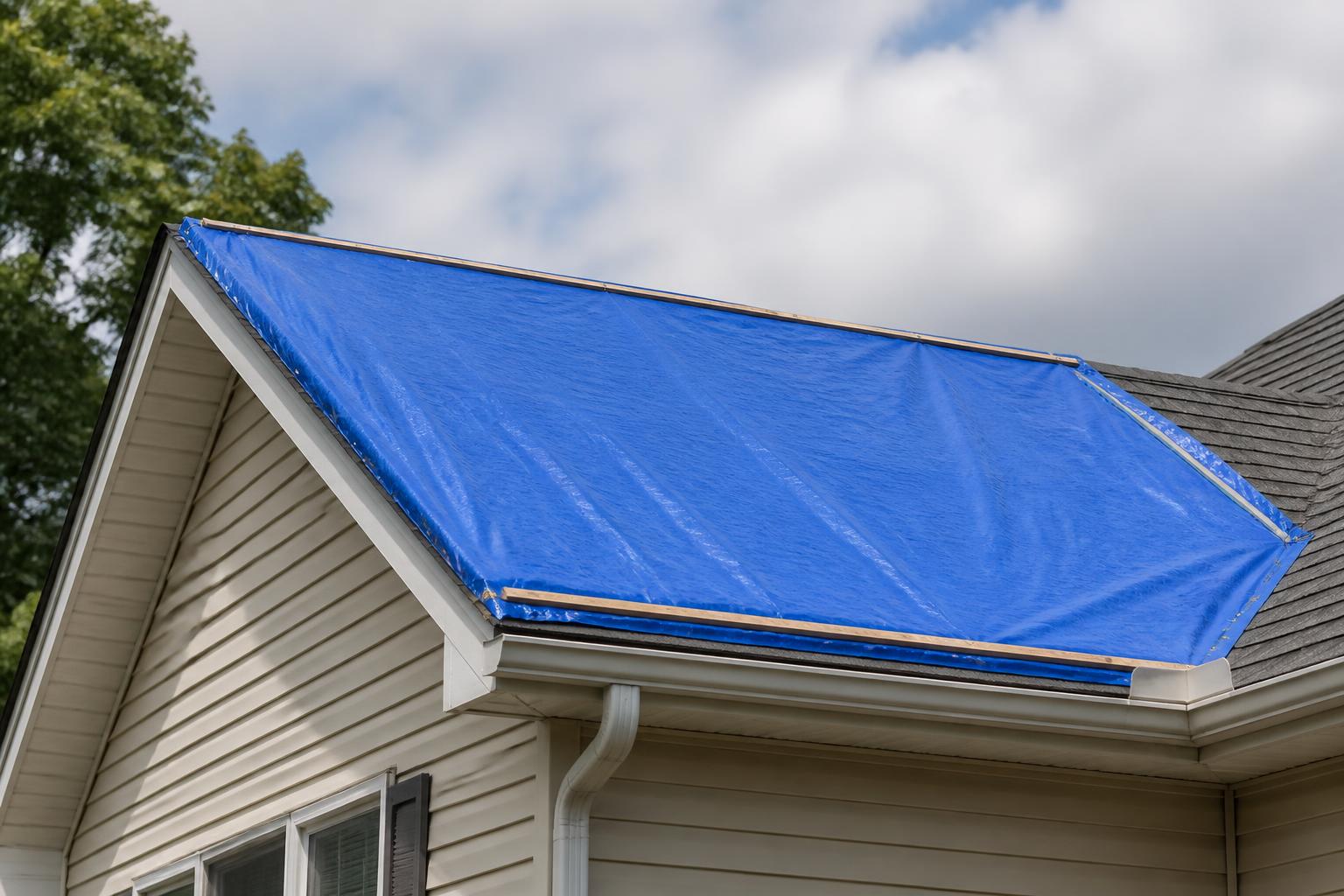
A damaged roof can leave water, wind, and debris with a direct path into your home. If shingles are missing, flashing is lifted, or a branch has opened a gap, the next step is to cover the exposed area before the problem spreads.
Salty Dog Remodeling helps homeowners and property managers secure damaged roof sections with roof tarping services for Leesburg, VA. We assess the exposed area, install a protective tarp, and help limit additional interior damage while you plan the repair or replacement that follows.
Roof tarping is used when part of the roof covering no longer keeps out weather. It is a short-term protective measure meant to reduce exposure until a permanent repair can be scheduled. The goal is to stop a small opening from becoming a larger interior problem.
This service is often requested after missing shingles, storm damage, lifted edges, punctures, or impact from falling limbs. It can also help when a leak is active and the damaged section needs coverage before further work begins.
When you call Salty Dog Remodeling, we focus first on limiting further exposure. We look at the damaged area, confirm the size of the opening, and choose a tarp approach that matches the roof shape and condition. The tarp is then placed to cover the exposed section and fastened so it stays positioned as intended.
Because every roof damage situation is different, the work has to account for pitch, access, and the location of the opening. A tarp that is too loose can shift, while one that is poorly placed may leave part of the damaged area uncovered. Our approach is meant to create a tighter temporary shield until repair work can move forward.
A roof opening does not stay isolated for long. Once water enters, it can move along framing, insulation, and ceiling materials before the leak becomes obvious indoors. That is why covering the damaged section quickly matters, even when the visible roof problem seems limited.
In Leesburg, VA, homeowners often reach out after a sudden incident or after noticing a leak during a rain event. The tarp is not the final fix, but it helps buy time and reduce the reach of the damage while the next phase is planned.
Covering the exposed area can reduce the amount of water entering the structure.
Shielding open sections can help keep the damage from growing while repairs are arranged.
A secured tarp can block some windblown debris from entering through the opening.
Storms can lift shingles, loosen flashing, and expose vulnerable sections of the roof. Even when the damage seems small from the ground, the exposed area may still allow water to travel into the home. Roof tarping gives you a protective layer while you decide whether repair or replacement is the better path.
Salty Dog Remodeling works with property owners who need a temporary cover after roof damage has been discovered. We can help stabilize the situation so you are not trying to manage an open roof while also sorting out the next step.
Before anyone arrives, keep clear of the damaged area indoors if water is coming through. Move furniture, electronics, and items that can be harmed by moisture. If you can do so without risk, place a container to catch active dripping and document the area for your records.
Try not to climb onto the roof yourself. Damaged roofing can be unstable, slick, and difficult to evaluate from above. A temporary cover should be placed with the right access and attention to the roof surface, not by guesswork from a ladder.
Move items away from active leaks and reduce contact with water.
Note where the opening appears and whether the problem is spreading.
Contact Salty Dog Remodeling at +17039568610 to discuss the exposed area and next steps.
Roof tarping is not just a quick patch. It is a protective measure that helps create breathing room after damage occurs. Without it, even a small exposed section can allow more water into the home, which can complicate the eventual repair and expand the work needed indoors.
For homeowners and businesses around Leesburg, VA, a tarp can help preserve the condition of the property while you decide how to move forward. It is especially useful when the damaged roof section is too exposed to leave alone but not yet ready for a permanent solution.
Once the opening is covered, the next step is to decide whether the roof needs repair or replacement. That decision depends on the extent of the damage, the age of the roof system, and how much of the surface was affected. Salty Dog Remodeling can help you understand what was damaged and what work should come next.
Because we also handle roof repair and roof replacement, we can keep the conversation focused on the actual condition of the roof rather than forcing a one-size-fits-all approach. The goal is to move from temporary protection to a clear plan that fits the property.
Our roof tarping service is available to homeowners and property owners across Leesburg, VA and nearby communities, including Ashburn, Sterling, Purcellville, Lovettsville, Hamilton, Round Hill, Herndon, and Fairfax. If the roof has been exposed, the priority is to cover it before more damage spreads.
When you need a temporary roof cover and clear direction on what comes next, Salty Dog Remodeling is ready to help from our Leesburg location at 821 S King St # J, Leesburg, VA 20175, USA.
A tarp is meant to provide temporary protection only. The time it can remain in place depends on the condition of the roof, weather exposure, and when permanent repair work begins.
Yes. If the leak is traced to a roof opening or damaged section, tarping can help reduce further water entry while the source is addressed.
Missing shingles, torn roof sections, branch impact, lifted flashing, and visible openings are all common reasons to cover the area temporarily.
Yes. It helps protect the property while you decide whether the roof needs a targeted repair or a more complete replacement.
We focus on the exposed section and place coverage based on the shape and reach of the damage so the open area is shielded as fully as possible.
Call Salty Dog Remodeling at +17039568610 to describe the damage and the roof area that needs coverage. We will help you move toward the next step from there.
Start Your Project
Tell us about your roof, interior remodel, or exterior project. We will help you review the scope, talk through your options, and plan the next step with clarity.